India
Transport Shutdown Looms in Delhi-NCR as Mega Strike Announced
May 21, 2026 Source: Bharat Vaani



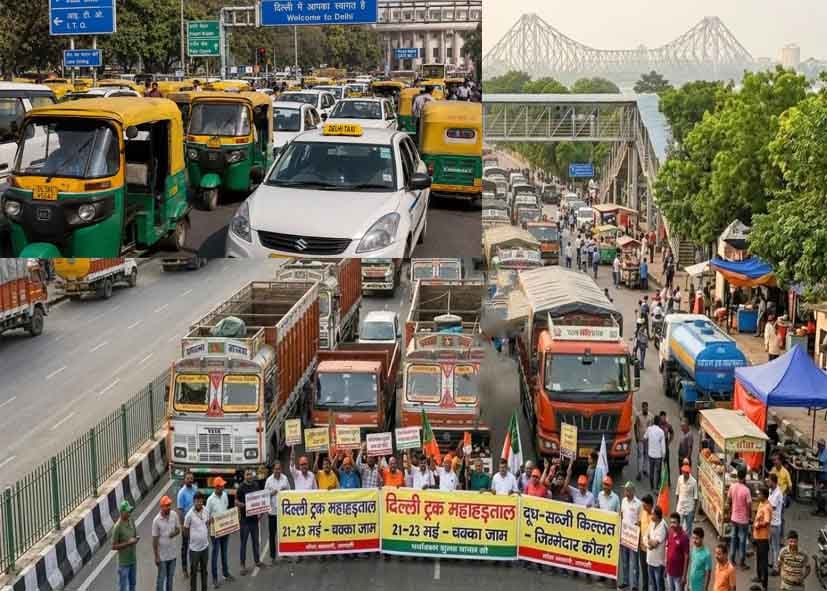
Delhi-NCR is expected to face significant transportation disruptions due to a three-day mega strike announced by major transport associations. The strike, scheduled from 21 May to 23 May 2026, is likely to severely affect the movement of auto-rickshaws, taxis, and heavy goods vehicles across the region, creating difficulties for daily commuters and logistics operations.
The protest has been organized under the banner of the All India Motor Transport Congress (AIMTC), along with other transport bodies. According to the associations, the strike is aimed at opposing government policies related to the Environmental Compensation Charge (ECC), often referred to by transporters as a “green tax,” as well as proposed restrictions on BS-4 and older commercial vehicles.
Transporters argue that these rules have increased financial pressure on drivers and small fleet operators. They claim that the ECC is being uniformly applied to all commercial vehicles, including those that should be exempt or regulated differently under existing guidelines. They also allege that the policy deviates from Supreme Court directions, which they interpret as limiting such charges to specific transit vehicles using Delhi as a passing route. As a result, transport operators say their operating costs have risen sharply, with estimates of additional expenses reaching ₹2,500 to ₹3,000 per trip for heavy vehicles. They warn that this cost burden could eventually increase the prices of essential goods for consumers.
The strike is expected to hit everyday commuting the hardest. Office workers, students, and passengers traveling to railway stations and airports may face major inconvenience due to reduced availability of auto-rickshaws, taxis, and freight services. However, app-based cab services such as Ola, Uber, and Rapido are expected to continue operations, although some drivers may voluntarily join the protest, leading to partial service disruptions.
In contrast, public transport services are expected to remain largely unaffected. The Delhi Metro and buses operated by the Delhi Transport Corporation are likely to function normally, providing some relief to commuters. Emergency services such as ambulances, hospitals, and medical transport are also expected to operate without interruption.
Transport unions have warned that if their demands are not addressed, the agitation could be intensified further in the coming days. Meanwhile, authorities are advising residents to plan their travel in advance, avoid unnecessary trips, and rely on metro and bus services where possible to minimize inconvenience.
Overall, the strike highlights ongoing tensions between transport operators and regulatory authorities over environmental compliance costs and vehicle restrictions, with potential ripple effects on mobility and supply chains across Delhi-NCR.